


Biography of Mirko Kovač (1938–2013)
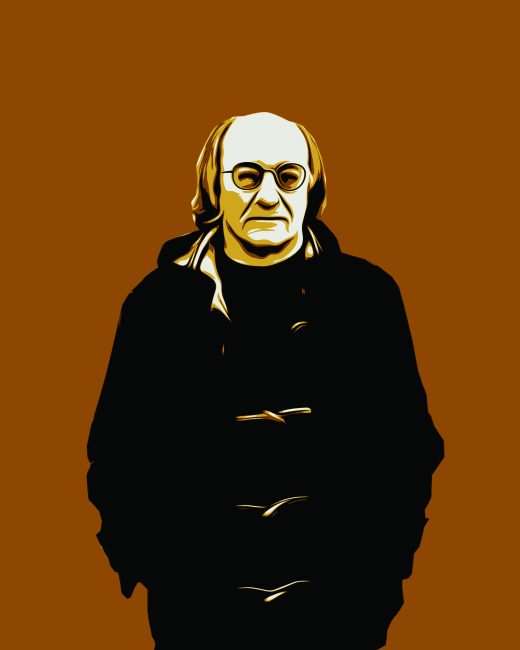
Mirko Kovač was a celebrated novelist, playwright, and essayist, widely regarded as one of the most important voices in South Slavic literature. Born in Montenegro, he studied dramaturgy at the Academy for Theatre, Film, and Television in Belgrade but left before graduating to publish his first novel, Gubilište (The Gallows, 1962).
Throughout his career, Kovač was known for his uncompromising artistic integrity. His works, often critical of political and social systems, faced censorship and persecution both in Communist Yugoslavia and later in Serbia under Milošević. Despite these challenges, his writing received great critical acclaim and reached an international readership.
He was the recipient of many prestigious literary awards, including the NIN Award, the Meša Selimović Award, the Vladimir Nazor Award, and the Kiklop Award for Lifetime Achievement in Literature.
“I am not one of those writers with a large audience, but I have always had loyal readers. I am part of the cultural and intellectual landscape rather than someone concerned with numbers. When people ask for whom I write, I always say: for literature. And literature, you must admit, is a great spell.” — from an interview
Among his most notable works are Gubilište (The Gallows, 1962), Moja sestra Elida (My Sister Elida, 1965), Životopis Malvine Trifković (The Life of Malvina Trifković, 1971), Ruganje s dušom (Mockery with a Passion, 1976), Vrata od utrobe (Door to the Insides, 1978), Uvod u drugi život (An Introduction to Another Life, 1983), Kristalne rešetke (Crystal Lattices, 1995), Grad u zrcalu (The City in the Mirror, 2007), and Vrijeme koje se udaljava (Time Which Fades, 2013).
Kovač also wrote several acclaimed screenplays and plays, including Lisice (Handcuffs, 1969), Pad Italije (The Fall of Italy, 1981), and Mali vojnici (Playing Soldier, 1967). His works have been translated into many languages and continue to inspire readers across Europe.