


20 Feb FIRST EVENT OF THE MULTIMEDIA REGIONAL PROGRAM HELD – NOT A FAIRYTALE BUT…
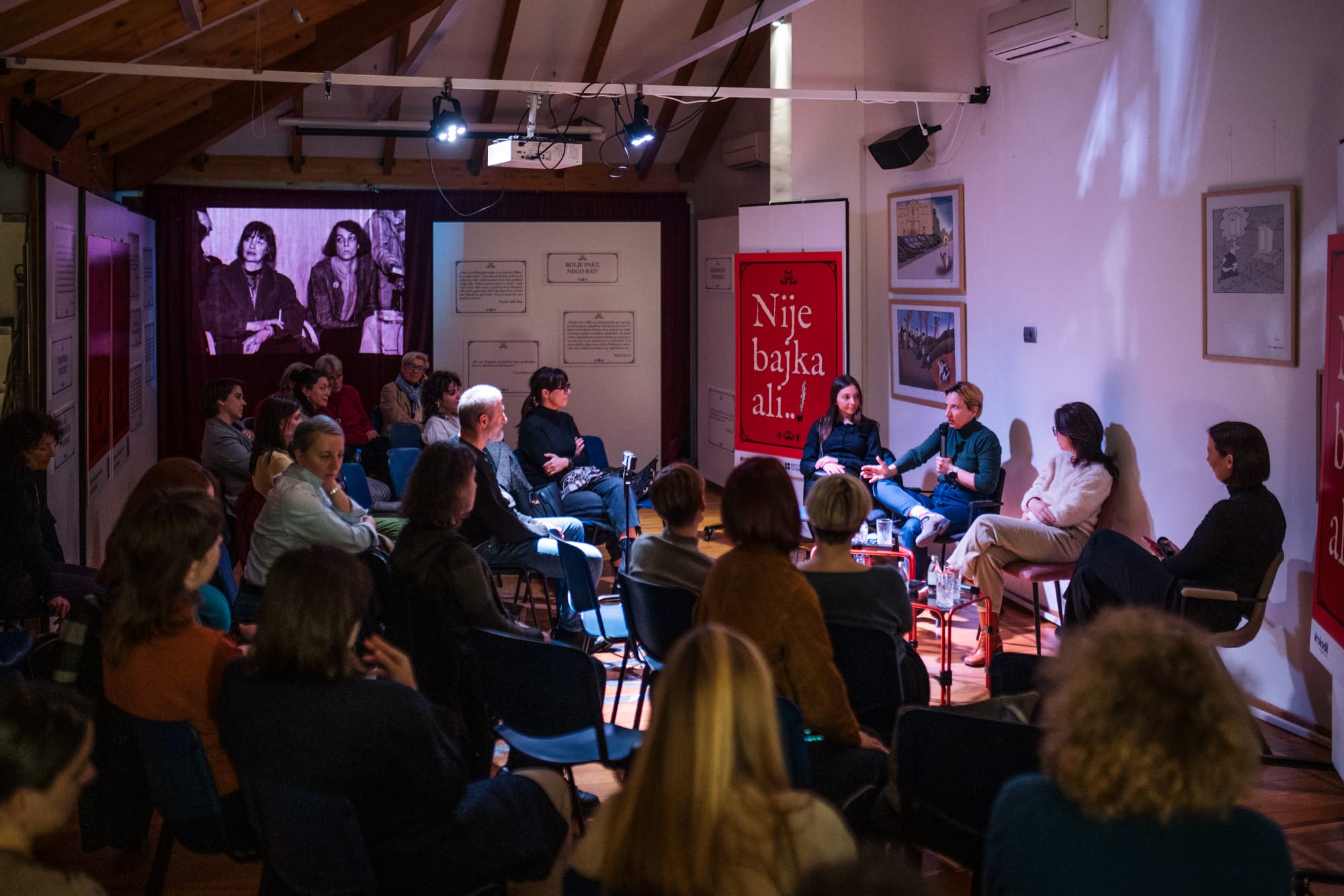
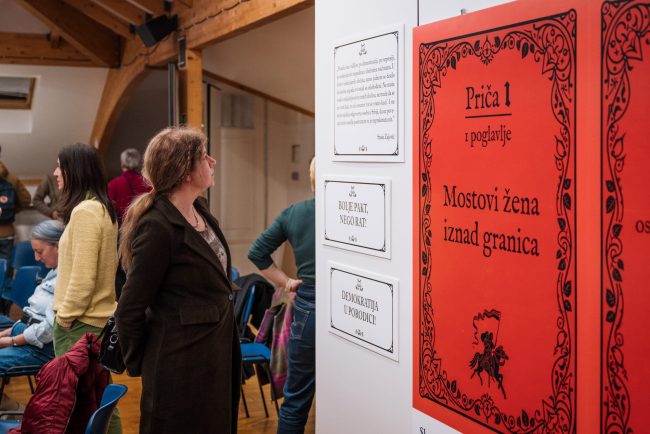
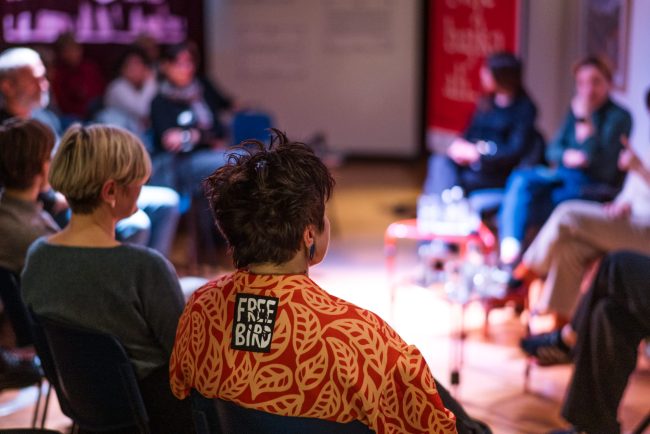
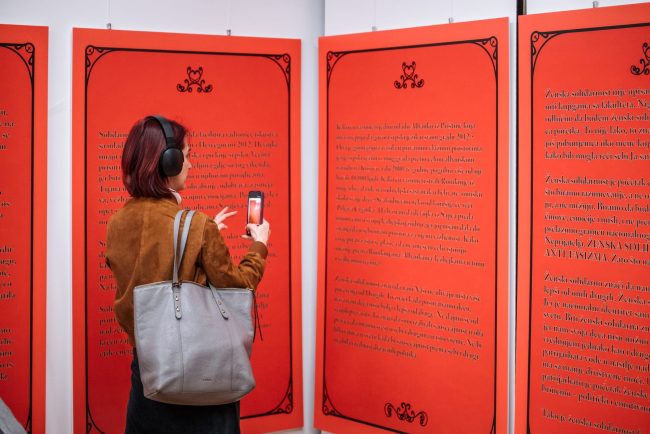
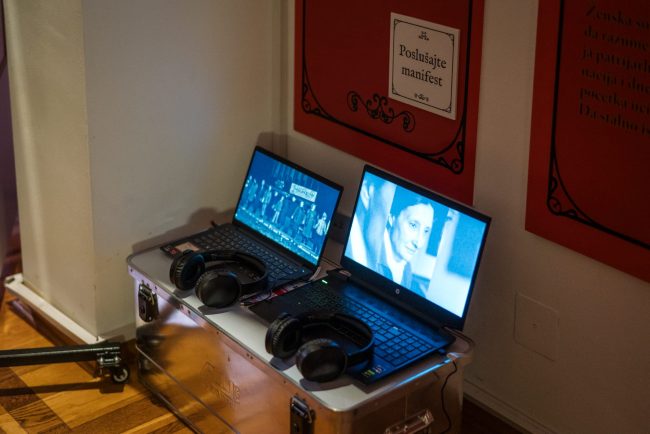
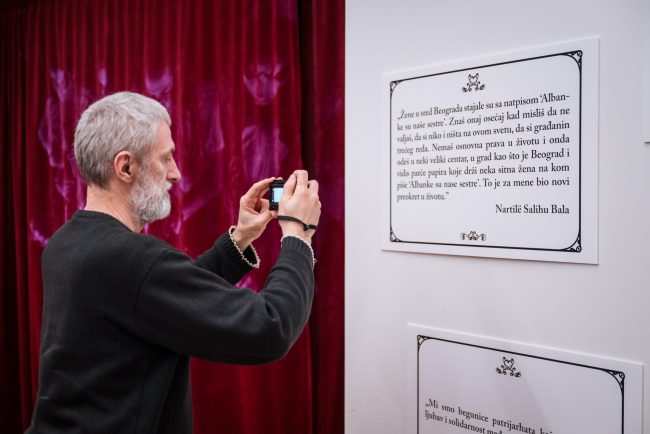
On Thursday, February 19th, the first event within the regional multimedia program titled Not a Fairytale But… was held at the Museum of the Nineties (Kneza Miloša 3, Belgrade). The event opened with a fifteen-minute film exploring the legacy of the feminist, peace, and lesbian movements in Serbia and Kosovo during the 1990s. Participating in the discussion following the film were the authors and collaborators of the first chapter: Dejana Cvetković, Dragoslava Barzut, and Nađa Bobičić, while the conversation was moderated by the editor of the first chapter, Milena Berić. Visitors had the opportunity before and after the event to view and listen to a spatial installation featuring Lepa Mlađenović’s Political Manifesto of Women’s Solidarity, some of the most striking banner quotes that marked the peace activism of the 90s, as well as the stories from the first chapter published so far.
Milena Berić opened the conversation on peace and activist heritage by presenting the stories published to date, which are available on krokodil.rs. She placed the topic of this heritage in the context of contemporary protests in Serbia, raising the question of the transgenerational transfer of knowledge. Nađa Bobičić, a literary critic and activist, pointed out the significance of the cooperation between women from Kosovo and Serbia in the 90s for today’s student movement in Serbia. She reminded the audience of the importance of supporting the anti-nationalist and emancipatory currents of this movement, which often remain marginalized compared to right-wing oriented ones. Dragoslava Barzut, a writer and activist with Civic Initiatives (Građanske inicijative), drew attention during the discussion to the necessity, but also the difficulties, of solidarity and situational cooperation with those who may not share our values. Journalist Dejana Cvetković spoke about the difficulties of reporting on minorities in Serbia today, especially the Albanian minority, which remains deeply marginalized.
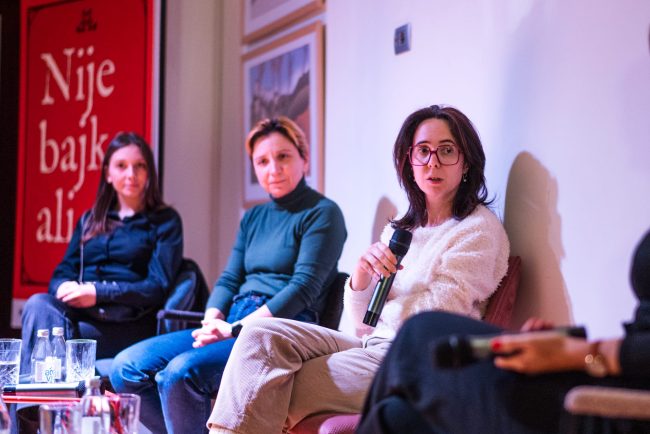
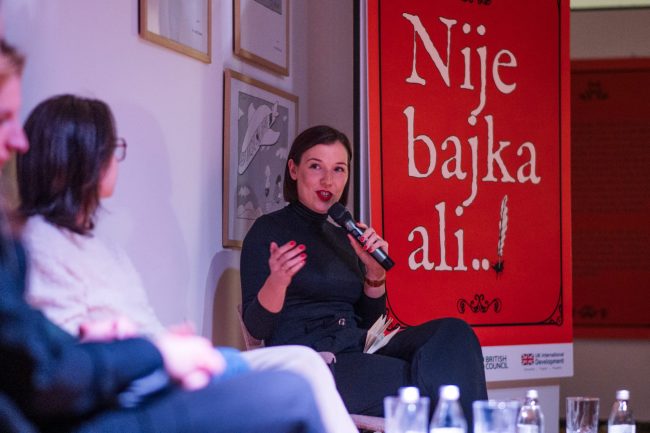
Additionally, the speakers problematized the use of militaristic language in the context of peace activism practices, but also discussed the possibility of re-signifying these words, giving them a new life without reference to their original meaning. The conversation concluded with the participants’ personal stories about their experiences of friendship and cooperation with women from Kosovo, which prompted a rethinking of friendship as political resistance.
After the discussion, attendees had the opportunity to continue the dialogue on the raised topics with music and a tour of the multimedia installation within the space. This exhibition includes Lepa Mlađenović’s Political Manifesto of Women’s Solidarity, two stories from the first chapter titled “Women Bridging Borders” and “A Young Woman for a Free Uni (Pristina-Belgrade, October ’96) or A Family-Like Friendship”, as well as some of the most significant banner quotes that marked the peace activism of the 90s.
We invite you to read and/or listen to the published stories of the first chapter on krokodil.rs, and to follow us for upcoming chapters that we will publish in the coming months. Also, join us for future events of the regional program Not a Fairytale But… in Sarajevo and Zagreb.
Photo: Alex Dmitrović
This project is funded by UK International Development and is implemented in partnership with the British Council.
Sorry, the comment form is closed at this time.