
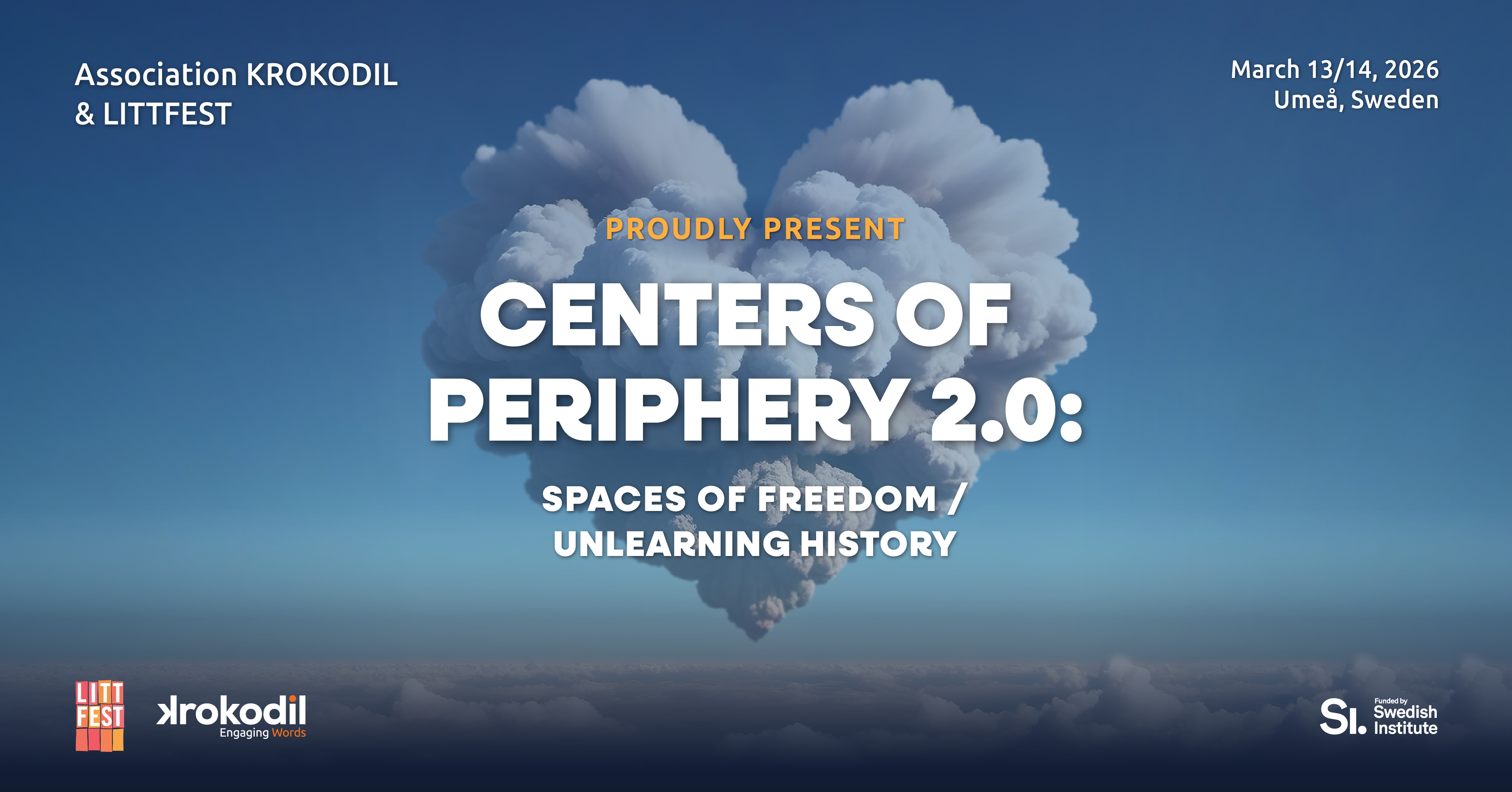
10 Feb KROKODIL AT LITTFEST: CENTERS OF PERIPHERY 2.0 13-14 March 2026, Umeå, Sweden
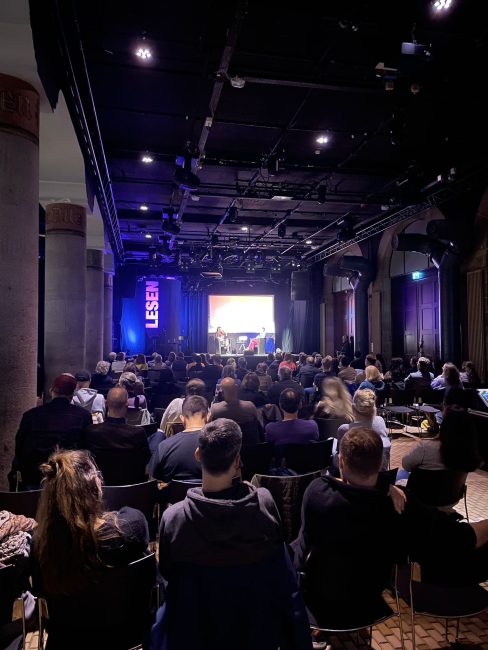
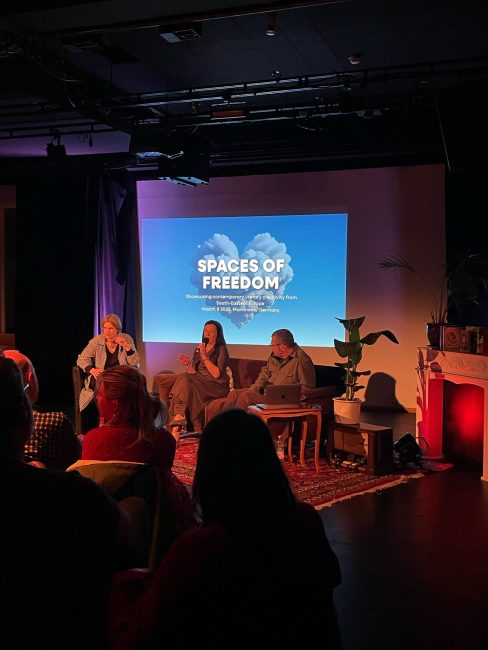
We are grateful for yet another opportunity to present SPACES OF FREEDOM, the traveling festival platform that promotes regional literature — this time as far afield as Umeå, one of the northernmost Swedish cities before the Arctic Circle. Showcasing vibrant and diverse post‑Yugoslav literature has always been our passion, and we are delighted to travel around Europe to meet enthusiastic audiences in places such as Berlin, Mannheim, Kraków and now Umeå.
Please check out the program below.
PROGRAM
Friday, 13 March, 16.45 – 18.15, Studion, Umeå Folkets Hus
SPACES OF FREEDOM – Showcasing Contemporary Literary Creativity from Southeastern Europe
With: Maša Kolanović, Radmila Petrović, Marko Pogačar, Faruk Šehić
Mini-concert: Ana Ćurčin
Presented by Mima Simić
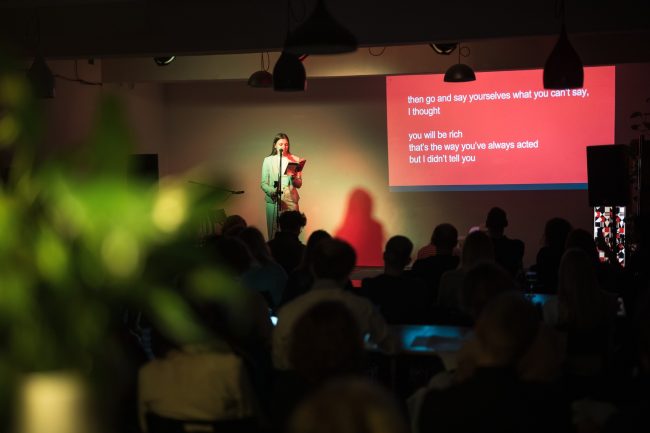
Four authors—Maša Kolanović from Croatia, Radmila Petrović from Serbia, Marko Pogačar from Croatia, and Faruk Šehić from Bosnia—will be presented through a combination of live readings of their work in the original language, accompanied by subtitles with translations in English, as well as short onstage interviews also in English.
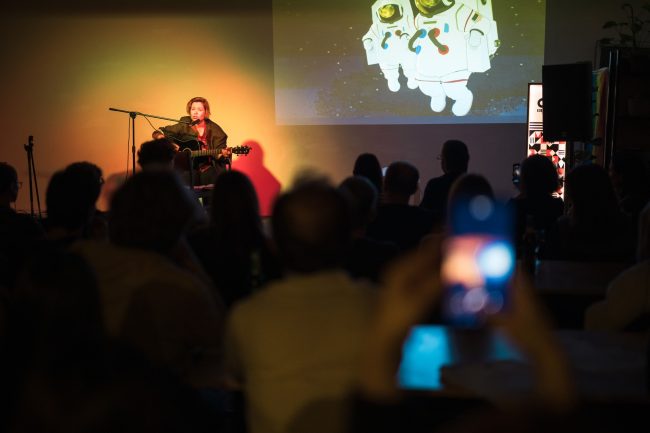
The program will feature a mini-concert by Ana Ćurčin, a Serbian singer-songwriter who blends music, text, and video to create new performance forms and her own distinctive style.
Mima Simić, an accomplished author and translator, will present the program. She is also a regular, idiosyncratic, and well-loved presenter of the KROKODIL Festival in Belgrade, Serbia.
Saturday, 14 March 2026, 10.00 – 10.45, Miklagård, Umeå Folkets Hus
UNLEARNING HISTORY – Panel discussion
With: Maša Kolanović, Faruk Šehić, Ana Ćurčin
Moderated by: Mima Simić
History, as both a discipline and an official, identity-shaping narrative, has played a crucial role in determining the region’s development since and during the collapse of Yugoslavia. In this sense, the topic of unlearning history—the possibility of opening narrative spaces for marginalized voices and non-nationalistic discourse—serves as the focus of this panel discussion. In the context of contemporary global tendencies of revisionistic narratives, this topic proves to be of great importance not only for the region of former Yugoslavia, but also for the broader European as well as global arena.

ABOUT CENTERS OF PERIPHERY 2.0
SPACES OF FREEDOM/UNLEARNING HISTORY is a part of a joint cooperation under the name of CENTERS OF PERIPHERY 2.0 between the Association KROKODIL in Belgrade, Serbia and LITFEST in Umeå, Sweden. This collaboration unites two distinct regions that, while peripheral in geographical terms, produce significant European literature. The collaboration includes a literary residence for authors from Sweden in Belgrade, SPACES OF FREEDOM/UNLEARNING HISTORY showcase event in Umeå, as well as the presenting of contemporary Sámi literature at the KROKODIL festival in Belgrade.
ABOUT SPACES OF FREEDOM/ UNLEARNING HISTORY
SPACES OF FREEDOM/UNLEARNING HISTORY is a festival/debate program conceived and organized by the Belgrade-based Association KROKODIL under the aegis of the CENTERS OF PERIPHERY 2.0 project conceived and executed in cooperation with Swedish literary festival LITTFEST and supported by the Swedish Institute. The program aims to provide a relevant presentation of the contemporary literary scene from this corner of the European continent for the Swedish and more broadly Scandinavian/Nordic audiences. Four contemporary authors from Bosnia and Herzegovina, Croatia and Serbia who write fiction, non-fiction and poetry will be presented through readings and short onstage interviews together with a mini concert in the middle of the program. The day after the main program, the participants shall engage in the panel discussion that focuses on unlearning the region’s official historical truths, aiming to reshape dominant revisionist narratives about the past, present, and future in the region of Southeastern Europe and align them with contemporary feelings of anxiety and insecurity shared by the majority of European and global community.
The cooperation has been funded by the Swedish Institute.
Sorry, the comment form is closed at this time.