


14 May 2026 Ukraine Travelogue ’12to8′ Dispatch No. 2
THURSDAY, MAY 7
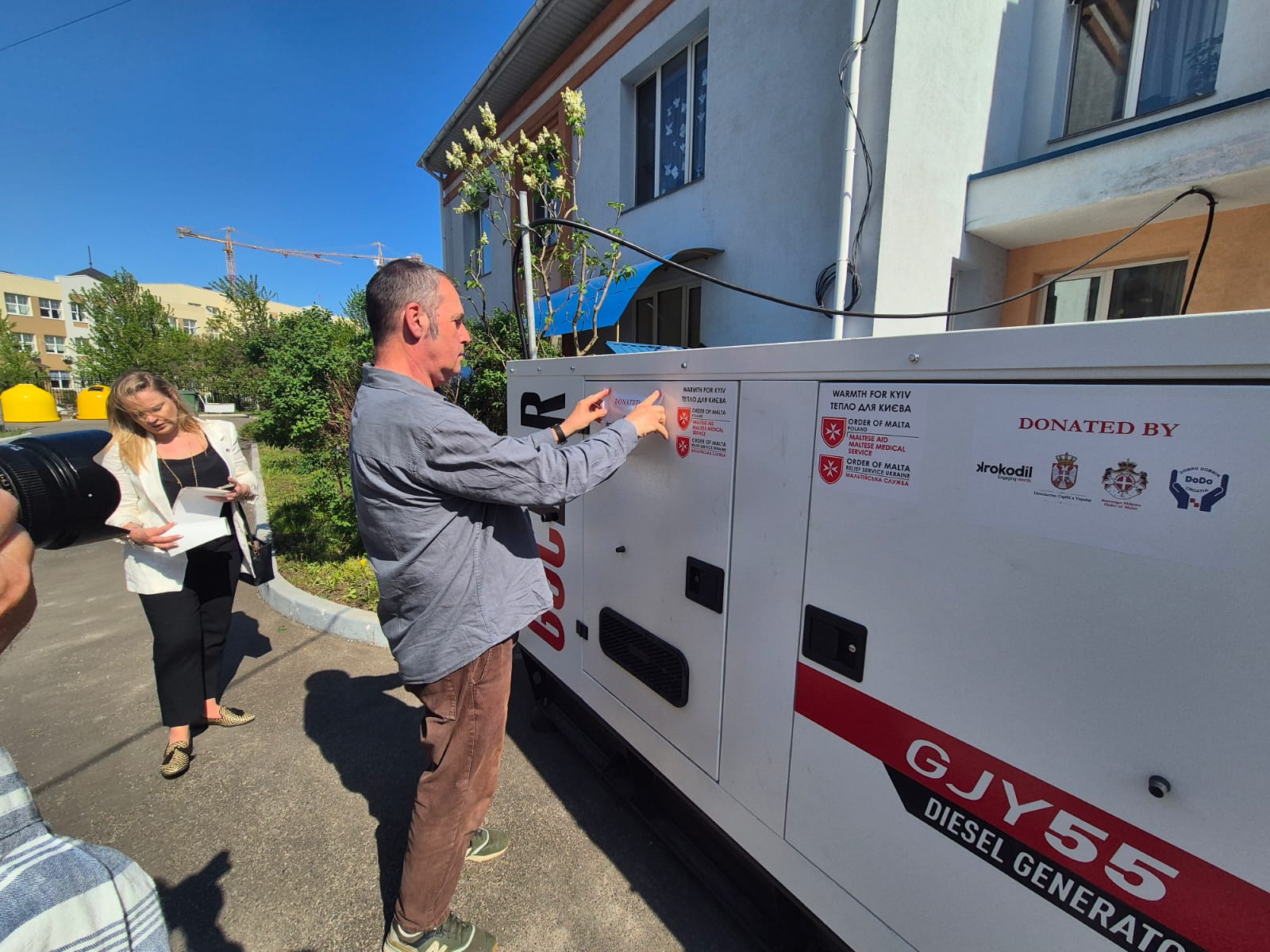
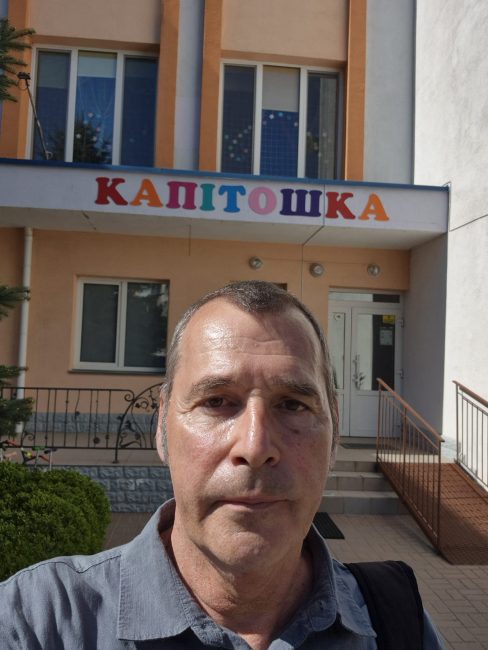
On Thursday, May 7, at exactly three o’clock in the afternoon, in Bucha, a sizable group of people gathered in front of the main entrance to the Kapitoshka kindergarten. Some of them were in dark suits and silk ties, while others held cameras and video equipment in their hands. I arrived together with Ambassador Sapundži after a quick lunch at a great Turkish restaurant not far from the Embassy of the Republic of Serbia in the center of Kyiv. The ceremonial handover of our electric generator to this institution for the youngest could begin. Prepared speeches were delivered, accompanied by appropriate applause and photo taking, and then we all moved to the other side of the building where this important piece of equipment had already been pre-installed.
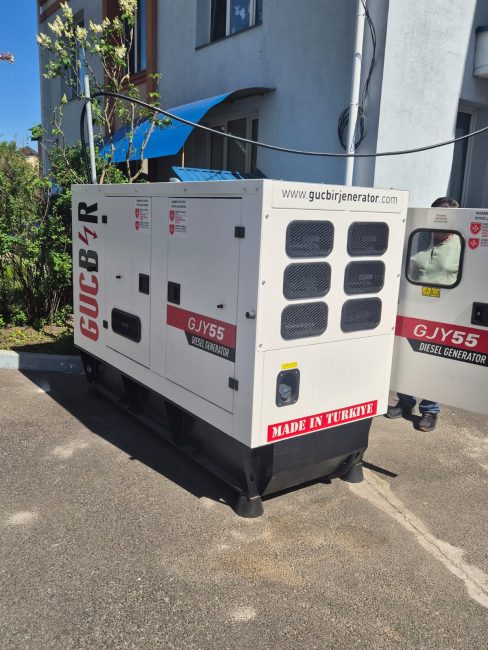
That there was no way we could ever single-handedly raise the substantial amount of money needed to purchase and install the 30 kW electric generator we had promised the director and staff of Kapitoshka was clear to us from the very beginning. We have been collecting humanitarian aid for Ukraine for years, but the resources at our disposal, along with the people who respond to our posts and sympathize with Ukrainian society, nevertheless remain very modest. However, the desire to help is great, sincere, and unconditional, and I have always thought that it is primarily thanks to this desire that we have always managed to provide what we promised to. So this time, too, we firmly believed from the very beginning that it would be so. We just needed, we thought, to find the right path to such substantial funds.
Given that the proposal to jointly help the children from the Kapitoshka kindergarten came from Ambassador Sapundži, who also established contact with the staff of this institution and the people from the Bucha city administration, we did our best to collect as many funds as possible from private donations. These reached us mostly from Serbia, but partly also from regional countries and abroad. Simultaneously, the ambassador tried to engage potential donors within Ukraine itself. Convinced that a certain form of regional cooperation could help, we reached out to friends from the Zagreb Institute for Democracy (IDEMO), and they directed us further to the humanitarian organization Dobro dobrim (DoDo). Readily joining this project, our friends from DoDo also engaged the Bosnia and Herzegovina organization PROI, thus creating an impromptu regional network of organizations which, combined with the ambassador’s intensive on-site efforts, simply had to achieve the desired goal.
Thanks to private donations, as well as larger amounts provided by companies like the Ukrainian concern MHP, we were close to our goal when the Sovereign Military Order of Malta also got involved in the whole story. With their participation, the matter was practically resolved, and in the end, the generator we provided to Kapitoshka was significantly larger and more powerful than planned. Through this joint regional and international effort and cooperation, we managed to secure a 50 kW electric generator with an additional twelve storage batteries that allow it to operate at full power for twenty-four hours, even in conditions where there is neither electricity nor fuel.
As so many times before, we were aware that all our efforts, the time invested, and the money collected were still just a drop in the ocean of needs that Ukraine and its citizens have. Still, one thing was certain: up to two hundred children from Bucha who attend the Kapitoshka kindergarten will not freeze in the dark next winter, eat cold food, or play by the light of flashlights.
And that, to me, is a great, great thing.
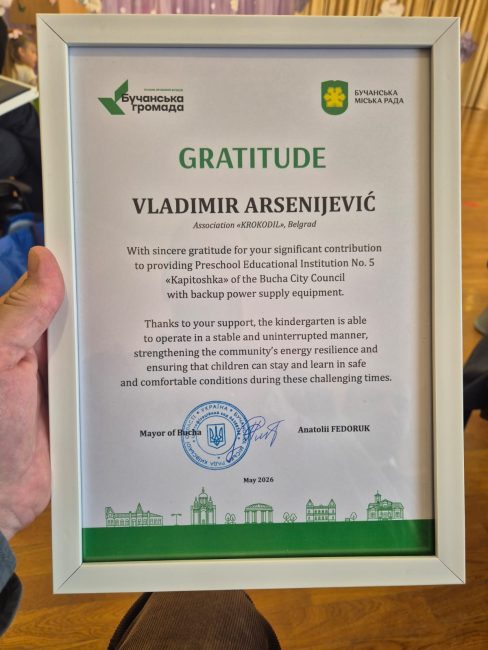

In the end, when all the ceremonial speeches had been given and the photojournalists had captured both the speakers and the generator with its storage batteries, we moved into the kindergarten’s ceremonial music hall, where the children and their teachers had prepared a touching program for us. I think everyone gathered was moved by the gratitude we encountered. And when we stepped back out into the strong May sun and a green Bucha that skillfully concealed almost all the wounds and traces of destruction and mass civilian suffering from 2022, it seemed to us, at least for a fleeting moment, and right here in Ukraine, that life has meaning, that happiness is a tangible, solid thing, and that reality is not quite as grim as it too often seems.
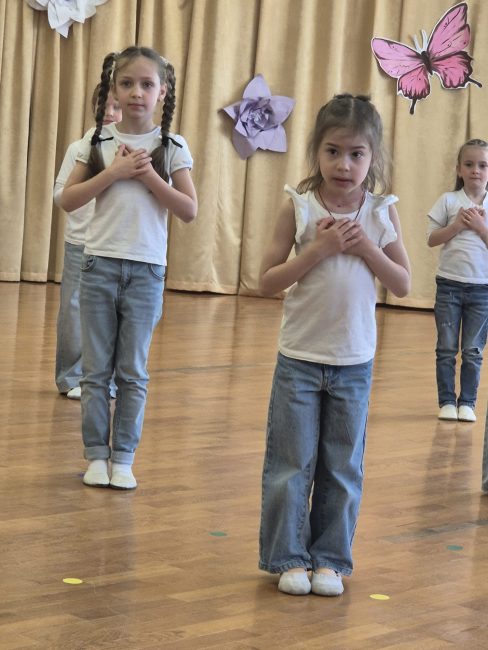
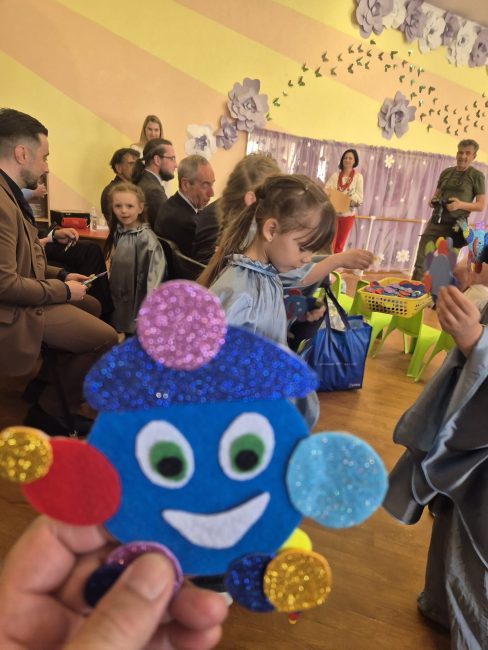
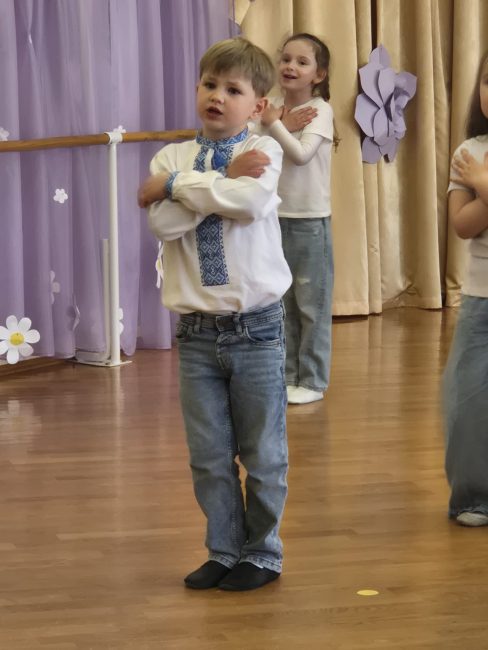
However, we were reminded that things aren’t quite so simple by a notification that over the next two days—May 8 and 9, when Victory Day is celebrated across Europe and then in Russia—a coordinated drone attack on Kyiv was possible, and that in such an event, the main target would certainly be the Verkhovna Rada of Ukraine. Therefore, it was emphasized to us, we should be ready to evacuate if an attack actually occurs and take standard precautions. My personal precaution consists of having installed an air raid alert app—which I already used during my stay in Lviv last October, which coincided with the heaviest Russian shelling of that city since the war began—and mentally preparing myself for yet another confrontation with the atavistic legacy of aggressive primates, which in humans is reflected in tribal divisions, the hierarchical structure of our societies, endless warfare, and the rule of the strongest. Thus, Putin too will one day meet his end, but that trait of the human species will, unfortunately, still remain with us.
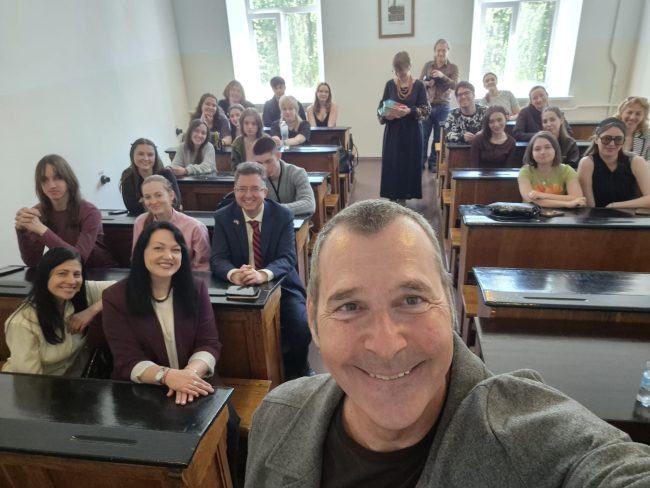
By the way, I shouldn’t fail to mention that in the first part of the day, before leaving for Bucha, I had a lecture and discussion with students of both Serbian and Croatian studies at the Faculty of Philology of Kyiv University.
We talked about books and wars, about wars and books, about books in wars and wars in books… And I would say we understood each other very well. Along the long, straight corridors of the nineteenth-century building and in the beautiful faculty garden, photographs are displayed of students and staff of this institution who have been killed during the four-year Russian aggression. When one pauses in front of the photos of these young people to pay tribute in a moment of silence, it is impossible to shake the eerie impression that nothing is over yet and that, unfortunately, there will be more victims like them.
Therefore, I hope that at least the children, who received us so warmly and wonderfully at the Kapitoshka kindergarten, will be able to live in a society freed once and for all from the toxic and murderous Russian influence…
Next dispatch – tomorrow at the same time.
Sorry, the comment form is closed at this time.