


14 May 2026 Ukraine Travelogue ’12to8′ Dispatch No.4
SATURDAY/SUNDAY, May 9 and 10
And so, there it is.
Our fourth humanitarian trip to Ukraine quickly came to an end. Everything this time was truly exactly as one could only imagine – wonderful, practically summer weather came as a reward to the people who had to endure an exceptionally difficult winter, along with rich, warm sun under whose rays the exhausted Kyiv bathed with enjoyment and showed itself in its best light. Even Russia, during these days filled with various holidays (Victory Day / Europe Day / Mother’s Day), did not carry out its threat to shell the very center of Kyiv. Instead, it focused on a pathetic exhibition of its questionable military power, the only one it has left at all, on Red Square in Moscow, in front of a dictator distorted by an excessive dose of botox (or perhaps rather by pure, accumulated evil?), followed by mockery across Europe—except for that sad excuse for a ‘march’ which took place in – where else? – Belgrade, the capital of the wannabe Moscow governorate of Serbia, under the name Immortal Regiment.
Immortal, my ass.
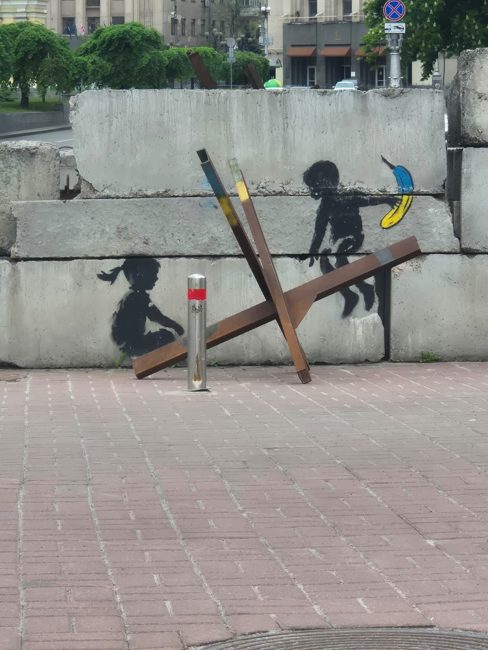
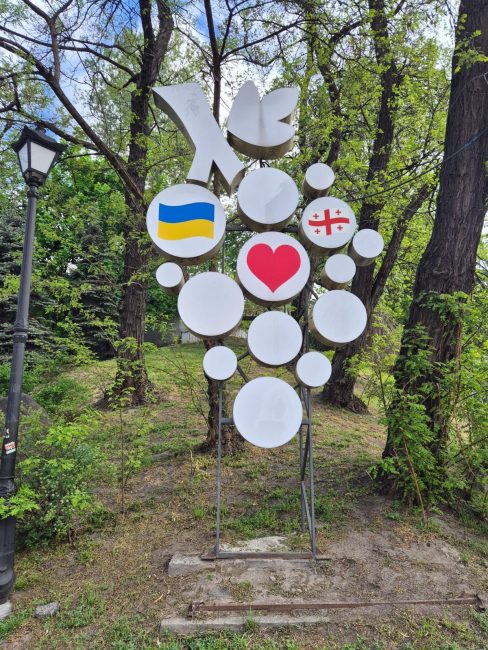
I am writing these lines at the Frederic Chopin Airport in Warsaw waiting for a flight to Belgrade. I traveled here on a packed bus for a full fourteen hours. The hold-up at both sides of the Ukrainian-Polish border in the dead of night, stretched until dawn. The amount of humiliation that Ukrainians have to endure every time they leave the country and the effort they have to put in to go anywhere, plus the amount of documentation in the case of men designated for military service, are just another element of life here that requires ten times more energy, will, and, in this specific case, patience than is the case with other European countries. But regardless of that, Ukraine is preparing for better days and maintaining a good mood – all over Kyiv there are rectangular standing billboards with a stylized image of Archangel Michael, the patron saint of this city and its official symbol, which read: “Kyiv is waiting for you after the victory!” And when those days come and when victory is finally won, civilian aviation planes will once again fly in the Ukrainian sky instead of drones and missiles, and the citizens of this country will travel the way citizens of all other European countries travel, for better or for worse.
By the way, I had waited a long time for the opportunity to get to know Kyiv a little better, and I am grateful that it finally presented itself. During all previous trips that inevitably led us from the west to the east or south of this large country, we necessarily passed through the capital and crossed the wide Dnieper there, which divides Ukraine into two proportionally unbalanced wholes: its west (formerly Habsburg) and its east (which historically gravitated more towards Moscow). On those long, long journeys, we usually arrived near Kyiv in the middle of the night, and I, already tired but fascinated, watched the huge classicist and modernist buildings and glass multi-story structures that line the wide road on both sides, stretching practically into infinity. And I always felt it was a pity that my obligations did not allow me to spend at least some time in the city, dive deeper into the network of its streets and squares, and get to know it at least somewhat. Now I think it is good that it happened this way, because I could hardly have gotten to know it in a better light than these sun-drenched May days.
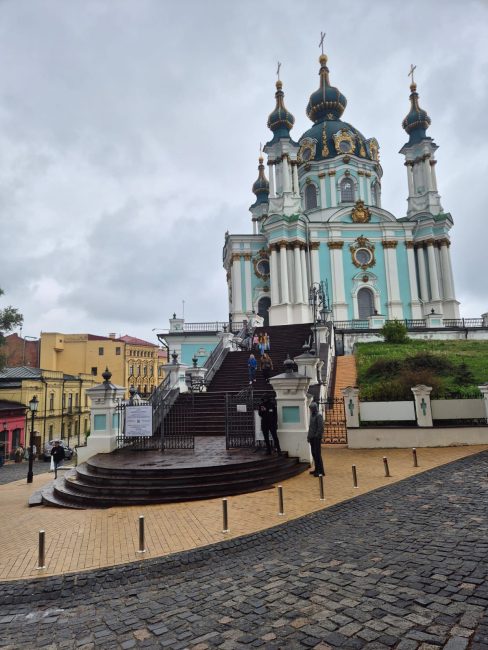
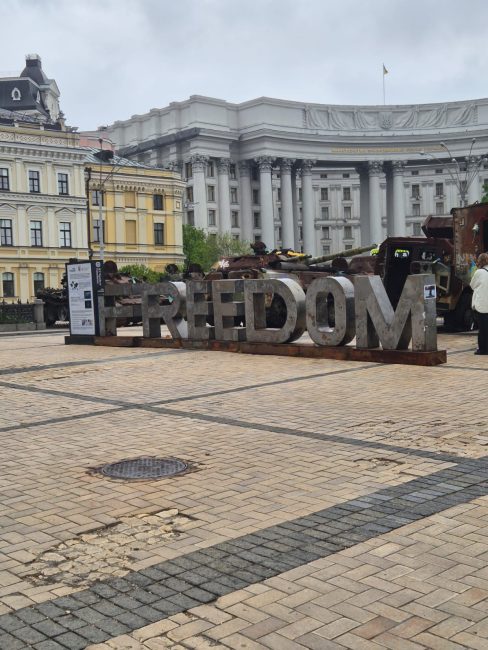
A fascinating ancient city, filled with history at every step but at the same time looking to the future; often restrained in all its aspirations due to negative Russian influence—usually extremely toxic—and a conquering aggression with no end in sight, it nevertheless grows, develops, changes its face, modernizes, and simply blossoms in the midst of all this war horror in dual parallel processes that are visible at literally every step in the form of positive, inspiring contrasts. They convincingly testify that Ukraine knows where it needs to go, if only circumstances would allow it to do so unfettered and in accordance with its own will. And, even better, it seems to know exactly what to do once it gets where it is heading.
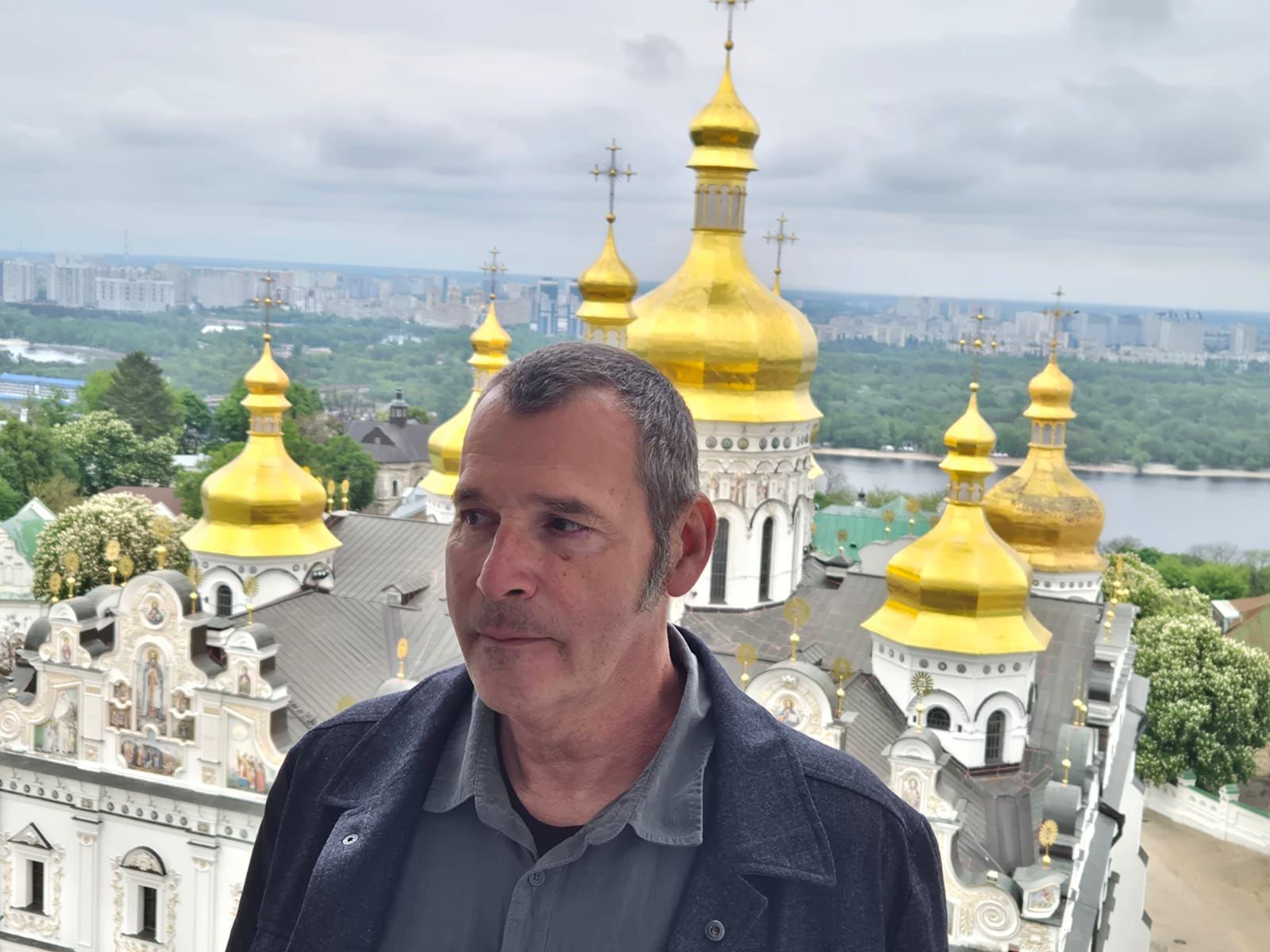
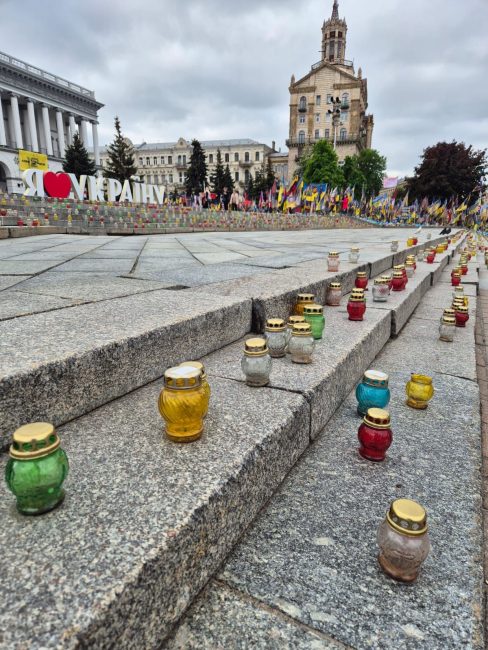
Kyiv is, simply put, a beautiful city. Its monumental public buildings, wide boulevards, impeccably well-kept parks, highly aestheticized monument culture at all levels, the huge river that cuts it in two, its churches with snow-white facades and golden roofs and the medieval monasteries around which the city grew, its baroque squares, cobbled streets, its museums, theaters – hell, even the circus here is not an ordinary tent erected temporarily on some meadow, but a prominent rotunda built in the style of monumental classicism of the Stalin era – all this is arranged in a highly harmonious urban whole lying on the hills above the right bank of the Dnieper and then on the plain on the left side of the river. Walking through the city, I felt how good it was that I was there, how natural and beautiful it was to be here, and to share with the local people – as much as possible – the life they live and everything they go through. People in Ukraine in general, and this is especially visible among the residents of Kyiv, are not prone to despair, bad spirits, or even the most ordinary complaining. Despite the negative experience they cannot avoid, they are not hardened, they have not become mean, nor have they lost contact with the world; on the contrary. Like a black mirror, it showed them the depth of the abyss that awaits them if they do not resist. And they are resisting. Silent witnesses of the resistance are the many memorial spaces located in various places in the city, filled with candles, flags, and photographs of the vast majority of young people who have given their lives so far in this ruthless, unjust war – an estimated 150,000 of them from February 2022 to today.
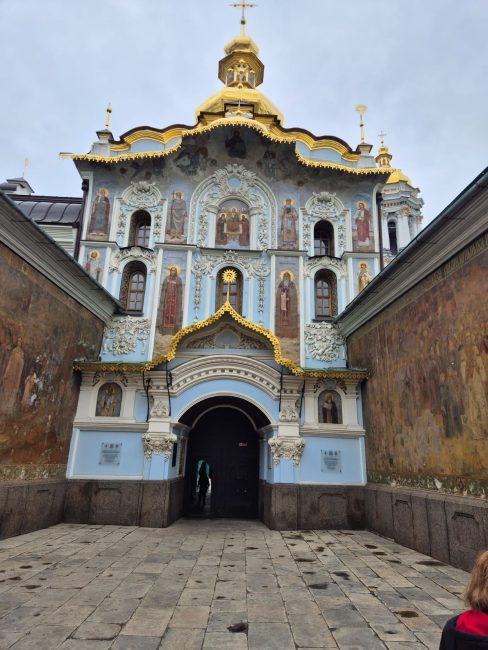
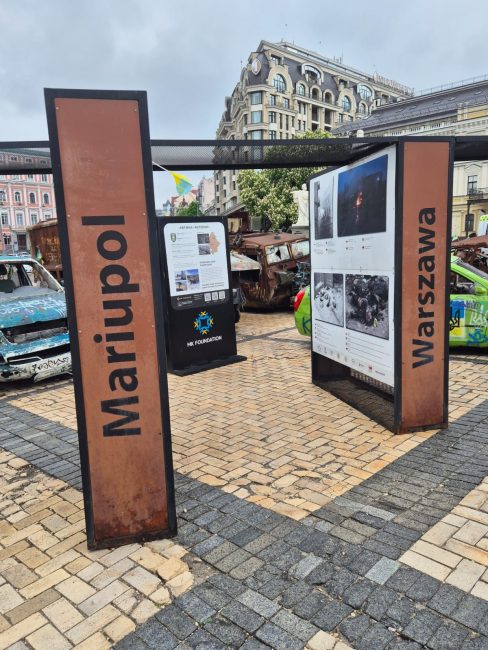
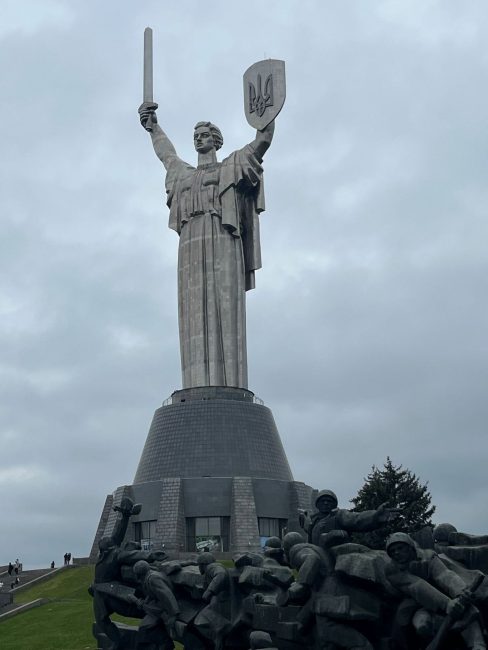
I spent the last few hours in the city with Ambassador Sapundži. Polite and accommodating as usual, he took me on a tour of St. Sophia’s Cathedral, a top architectural monument dating back to the eleventh century and the period of Kyivan Rus, and then the St. Michael’s Golden-Domed Monastery, another medieval monument miraculously preserved to this day, complete with fantastic frescoes and shimmering mosaics adorning its interior. For a while, we wandered the elegant surrounding streets lined with chestnut trees in full bloom, and then we headed towards the Kyiv-Pechersk Lavra and finally to the Motherland monument that watches over the Dnieper river basin and the eastern side of the huge city, much like the Victor monument eternally watches over the confluence of the Sava and the Danube in Belgrade. The thought of Kalemegdan reminded me that it was time to start my long journey towards Belgrade and that it was time to say goodbye to Kyiv and Ukraine.
Until the next opportunity.
Sorry, the comment form is closed at this time.